Parents often ask me, “How do I know if my child is ready for piano lessons?”
Many parents focus on age. They wonder whether four is too young, whether five is the perfect age, or whether they should wait until six or seven.
In my experience, however, age is only one part of the answer.
I have been teaching piano since 2001, and over the years I have worked with many young beginners. Before starting regular lessons with a young child, I like to check a few simple skills. These skills help me determine whether the child is ready to understand basic piano concepts and follow instructions during a lesson.
The good news is that parents can try these activities at home, too.
You do not need a piano for all of them. You only need a few minutes, seven colored pencils, and your child’s hands.
Before starting, remember that every child develops differently, so these tests are simply a guide to help you decide if your child is ready for piano lessons.
Child Ready for Piano Lessons: 3 Simple Tests
Here are three simple piano readiness tests that I often use with young beginners.
1. Can Your Child Say A–G Forward and Backward?
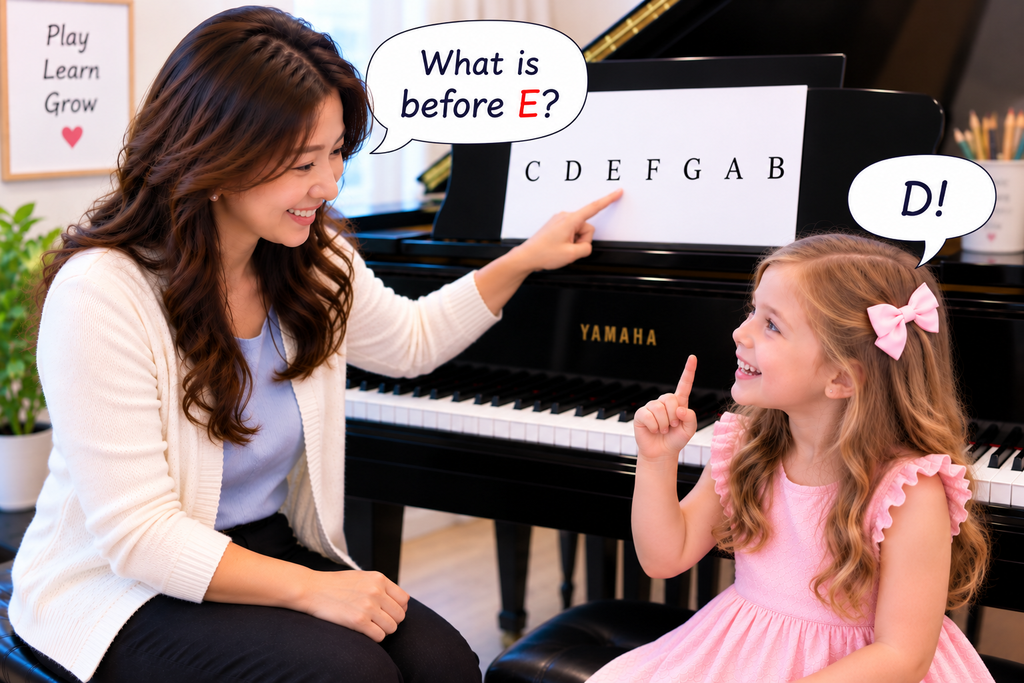
The first thing I check is whether a child knows the letters:
A – B – C – D – E – F – G
Most children who know their alphabet can say these letters forward without much difficulty.
But I also ask them to go backward:
G – F – E – D – C – B – A
This second part is important.
Piano students constantly work with direction. When we move toward the right side of the piano, the notes become higher. When we move toward the left side, the notes become lower.
Because of this, a young beginner needs to understand that things can move in two directions.
A child does not need to understand music theory yet. However, being able to think forward and backward helps when learning how notes move on the keyboard and, later, on the music staff.
Try asking your child:
“Can you say A through G?”
Then ask:
“Now can you say it backward, from G to A?”
If your child can do both comfortably, move on to the next test.
2. Try My Rainbow Pencil Test
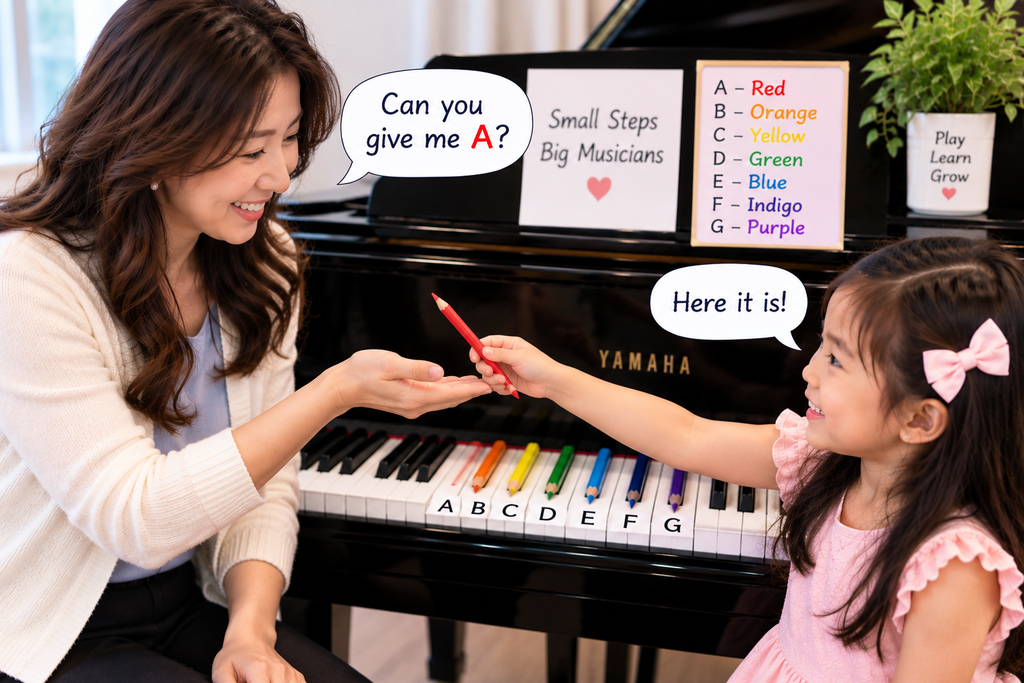
This is one of the activities I like to use during an early lesson with a young beginner.
Find seven colored pencils. If possible, use seven different colors, like a rainbow.
For example:
A = Red
B = Orange
C = Yellow
D = Green
E = Blue
F = Indigo
G = Purple
Place the seven pencils in front of your child in A-to-G order.
Now turn it into a game.
Ask your child:
“Can you give me A?”
If A is the red pencil, your child should hand you the red one.
Then mix up your questions.
“Can you give me G?”
“Can you give me C?”
“Can you give me F?”
Do not always ask in alphabetical order. The goal is to see whether your child understands each letter individually rather than simply memorizing the sequence.
Now Reverse the Game
Once your child has handed you all the pencils, switch roles.
Give one pencil back and say:
“Put this one on A.”
Then give another pencil and say:
“Put this one on F.”
Continue with different letters in random order.
This small change tells me a lot.
In the first activity, the child hears a letter and finds the correct object. In the second activity, the child receives an object and must remember where it belongs.
These are simple skills, but they are very useful when a child begins learning the piano keyboard.
And because the activity feels like a game, children usually enjoy doing it.
3. Can Your Child Control Each Finger?
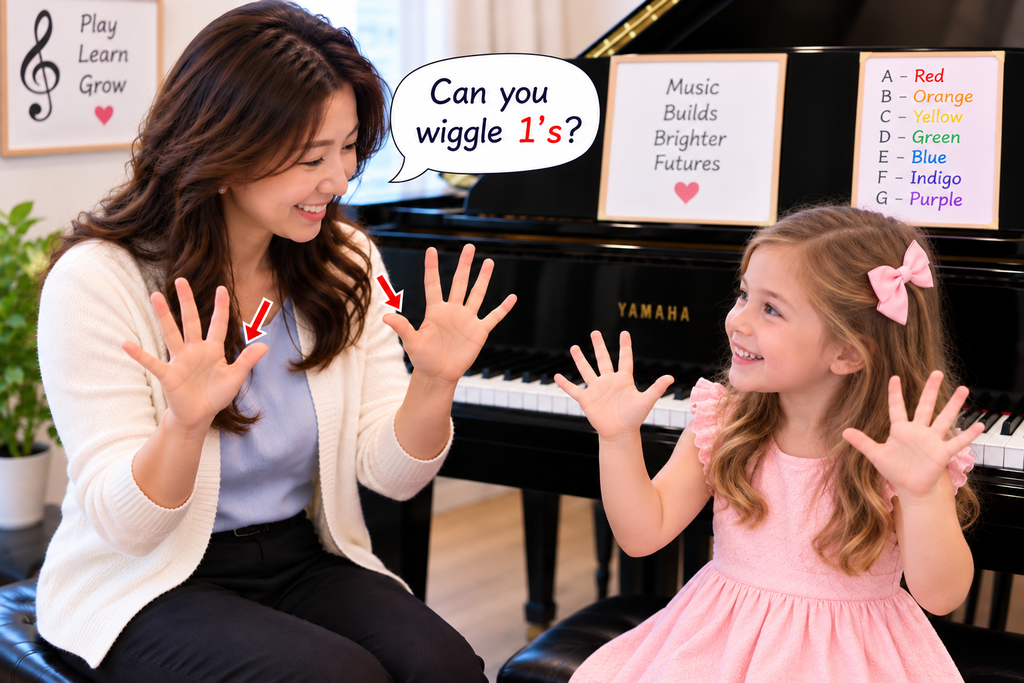
The third thing I check is finger awareness and control.
Piano has its own finger-number system. Fortunately, it is very simple.
For both hands, the fingers are numbered:
1 = Thumb
2 = Index finger
3 = Middle finger
4 = Ring finger
5 = Pinky
Ask your child to hold both hands open with all ten fingers showing.
Start with the thumbs.
Say:
“Show me finger number 1.”
Then ask your child to wiggle both thumbs.
Next:
“Wiggle finger number 2.”
Continue with fingers 3, 4, and 5.
At first, go in order:
1 – 2 – 3 – 4 – 5
Once your child understands the numbers, mix them up.
For example:
“Wiggle number 2.”
“Now number 4.”
“Show me number 1.”
“Now number 3.”
This is more challenging than it sounds for some young children.
They may understand the number but have difficulty moving the correct finger independently. That is completely normal. Young children’s fine motor skills are still developing.
I am not looking for perfect finger independence at this stage. I simply want to see whether the child understands the instruction and can make a reasonable attempt to move the correct finger.
What If My Child Cannot Do All Three Tests?
Do not worry if your child struggles with one of these activities.
It does not mean that your child is not musical or will not become a good piano student.
It may simply mean that your child needs a little more time before formal lessons begin.
You can practice these activities at home for a few weeks. Keep them short and playful. There is no need to turn them into serious study sessions.
Practice saying A–G forward and backward in the car. Play the rainbow pencil game at the kitchen table. Practice finger numbers for a minute while waiting for dinner.
Then try the tests again.
You may be surprised by how quickly a young child improves.
Parents can also visit the Music Teachers National Association for more information about music education.
Piano Readiness Is More Important Than Finding the “Perfect” Age
There is no single perfect age for every child to begin piano lessons.
One five-year-old may be completely ready, while another child of the same age may benefit from waiting a little longer. Children develop at different speeds.
That is why I prefer to look at piano readiness rather than age alone.
Can the child understand A–G forward and backward?
Can the child follow a simple letter-matching activity?
Can the child recognize finger numbers and attempt to move the correct fingers?
If the answer is yes, I usually feel comfortable beginning piano lessons.
These are some of the same simple activities I use when meeting a young beginner for the first time. They give me a quick picture of how ready the child is to begin learning basic keyboard and music-reading concepts.
Most importantly, keep the experience positive.
A child’s first introduction to piano should feel interesting and enjoyable, not like an exam.
If your child can complete these three simple tests—or is very close—it may be a great time to begin their piano journey.
If you’re wondering whether your child is ready for piano lessons, these simple tests can give you a good starting point.