Helping Students Love Piano & Practice Smarter
Simple,practical piano tips from an experienced teacher to help students practice better and enjoy music.
What We Offer
Latest Piano Tips
-
What Does a Sharp Mean in Music? A Beginner’s Guide to the Sharp Sign (♯)
When beginning piano students first see a sharp sign (♯) in their music, they often recognize the shape. I usually draw a sharp sign and ask: “Have you seen this sign before?” Some students say it looks like a hashtag. Others say it looks like a number sign or even a tic-tac-toe board. They are…
-
What Is a Measure in Music? Bar Lines Explained for Piano Beginners
What is a measure in music? When beginning piano students look at a piece of sheet music, they often notice vertical lines running through the staff. What are those lines? Why do we need them? And do we stop when we reach one? These vertical lines are called bar lines, and they help divide music…
-
Why Do Piano Students Keep Playing the Wrong Notes?
Every piano student plays wrong notes. Many parents wonder why piano students keep playing wrong notes, even after practicing the same piece several times. When a student is learning a new piece, I expect mistakes. They are reading new notes, learning new finger numbers, figuring out the rhythm, and coordinating both hands at the same…
-
What Is a Rest in Music? A Beginner’s Guide to Piano Rests
When beginning piano students first learn piano rests, they are learning that rhythm includes both sound and silence. Most students usually start with notes such as the quarter note, half note, and whole note. A quarter note gets 1 beat. The half note gets 2 beats. Whole note gets 4 beats. Then rests begin to…
-
How to Count 6/8 Time Signature: A Simple Guide for Piano Beginners
When beginning piano students first see a 6/8 time signature, it can look a little confusing. What does the 6 mean? What does the 8 mean? And how should we count the notes inside each measure? Before playing a piece in 6/8, I want my students to understand one important idea: There are six eighth-note…
-
3/4 vs. 3/8 Time Signature: What Is the Difference?
When beginning piano students first learn the difference between 3/4 vs. 3/8 time signature, they often think they are almost the same. After all, both have the number 3 on top. But look at the bottom number. One has a 4. The other has an 8. That small difference is very important. As a piano…
-
What Is a Time Signature in Piano Music? A Beginner’s Guide to 2/4, 3/4, and 4/4
When beginning piano students learn about in piano music, there are many things to notice include a time signature. What notes do I play? Where do my hands go? How fast should I play? But before we start playing, there is something very important that I want my students to check: the time signature. The…
-
How to Count Dotted Notes in Piano Music: Dotted Half Notes and Dotted Quarter Notes
Learning how to count dotted notes can feel confusing for beginning piano students. When students first learn note values, everything ususally feels fairly simple. A quarter note gets 1 beat. A half note gets 2 beats. A whole note gets 4 beats. Then a dot appears next to a note. For many students, that tiny…
-
Quarter Note, Half Note, and Whole Note: A Simple Guide for Piano Beginners
When piano beginners first learn about the quarter note, half note, and whole note, understanding how these note values are related can make rhythm much easier to learn. A quarter note gets 1 beat.A half note gets 2 beats.A whole note gets 4 beats. Students can memorize these numbers quickly. But I think there is…
-
How to Count Rhythm in Piano Music: Quarter Notes and Eighth Notes for Beginners
Learning how to count rhythm in piano music is one of the most important skills for beginning piano students. Reading the correct notes is important, but students also need to understand when to play each note and how long to hold it. That is rhythm. Many beginning students concentrate so much on finding the correct…
-
How to Find Any Note on the Piano: A Simple Guide for Beginners
Learning how to find any note on the piano becomes much easier when beginners understand the repeating pattern of black keys. When beginning piano students first look at the keyboard, all those white and black keys can feel overwhelming. Where is D? Where is F? How can you find A without counting all the way…
-
How to Find Middle C on the Piano: A Beginner’s Guide
Learning how to find Middle C on the piano is one of the first important skills for beginning piano students. But many beginners have the same question: “How do I know which C is Middle C?” A piano has several C keys, so it can be confusing at first. As a piano teacher, I teach…
-
Why Does My Child Hate Practicing Piano? A Piano Teacher’s Advice
One of the most common concerns I hear from parents is, “Why does my child hate practicing piano?” If your child hates practicing piano, there may be several reasons behind it. After teaching piano for more than 25 years, I have learned something important: There is not just one reason children do not practice piano.…
-
Why Are Finger Numbers Important in Piano? A Piano Teacher’s Guide to Fingering
Piano finger numbers are an important part of learning to play the piano correctly and comfortably. When learning piano, students often focus on reading the correct notes. Of course, reading notes is extremely important. But there is another skill that can make a huge difference in how smoothly and comfortably you play: finger numbers. We…
-
Should You Look at Your Hands When Playing Piano? A Piano Teacher’s Advice
Should you look at your hands when playing piano? This is a question many beginning piano students ask, and my answer is: sometimes—but not most of the time. During my piano lessons, there is one phrase I probably say more than almost anything else: “Look at the book.” I say it again and again because…
-
Why Can I Play Piano at Home but Make Mistakes During My Lesson?
Piano lesson mistakes can happen even when a student plays the same piece well at home. Have you ever practiced a piano piece at home and played it really well, only to make piano mistakes during lessons as soon as your teacher starts listening? You are not alone. I hear students say this all the…
-
How to Read Sheet Music for Beginners: A Simple Step-by-Step Guide
Learning how to read sheet music for beginners can feel challenging at first, but it is one the the most important skills a beginning piano student can help. When students can truly read notes, they are not limited to memorizing one song or copying someone else’s fingers. They can open a new piece of music,…
-
How Much Do Piano Lessons Cost? A Piano Teacher’s Guide to Lesson Prices
One of the first questions parents ask when considering piano lessons is, “How much do piano lessons cost?” It is an important question because piano lessons are usually not a short-term expense. Learning an instrument requires consistency, and many students continue lessons for several years. The cost of private piano lessons can vary considerably depending…
-
Piano Lessons Once a Week or Twice a Week: Which Is Better?
One question parents sometimes ask me is, “Is one piano lesson a week enough, or would twice-a-week lessons be better?” In the United States, once-a-week piano lessons are the most common arrangement. In my experience teaching on the East Coast, most children take one private piano lesson per week, while twice-a-week lessons are less common. There…
-
Why Is the Left Hand Harder When Learning Piano? A Piano Teacher Explains
Why Is the Left Hand Harder When Learning Piano? A Piano Teacher Explains As a piano teacher, I see this all the time: a beginner can read and play notes with the right hand fairly comfortably, but as soon as the left hand begins, everything seems to slow down. The student may recognize treble clef…
-
Should Parents Sit In During Piano Lessons? A Piano Teacher’s Advice
One question I often hear from parents when their child begins piano lessons is, “Can I sit in during the lesson?” My answer is always, “Of course.” Especially when a young beginner is starting piano lessons, I think it can be very helpful for a parent to observe. Parents can see how the teacher works…
-
7 Common Piano Beginner Mistakes and How to Fix Them: Advice from a Piano Teacher
7 Common Piano Beginner Mistakes and How to Fix Them: Advice from a Piano Teacher Learning piano is exciting, but beginners often develop small habits that can make playing more difficult later. After teaching piano since 2001, I have seen the same beginner mistakes many times—with both children and adults. Most of these mistakes are…
-
How Long Does It Take to Learn Piano? A Teacher’s Realistic Guide for Beginners
One of the most common questions I hear from new students and parents is, “How long does it take to learn piano?” The most accurate answer is: It depends. What Affects Your Progress? Every student is different. Age, natural ability, concentration, practice habits, lesson consistency, and previous musical experience can all affect how quickly someone…
-
What Do the Three Piano Pedals Do? Grand vs. Upright Piano Pedals Explained
When beginners first sit at an acoustic piano, they often wonder, “Why are there three pedals?” Learning how to use piano pedals for beginners can feel confusing at first, but understanding what each pedal does make the process much easier. The three pedals may look almost identical, but they have different purposes. To make things a…
-
Digital Piano vs. Acoustic Piano: Which Is Better for a Beginner?
When choosing a first piano, many parents wonder about digital piano vs. acoustic piano and which one is better for a beginner. One of the most common questions parents ask me is, “Should I buy a digital piano or an acoustic piano for my child?” My answer is simple: Choose the best piano that fits your child’s…
-
Adult Piano Lessons: Am I Too Old to Learn Piano?
Have you ever considered adult piano lessons but wondered if you are too old to begin? Adult piano lessons can be a wonderful way to start learning, no matter your age. After teaching piano for about 25 years, I have taught many adult students, from their 20s to their 70s. Most of them were not…
-
Is My Child Ready for Piano Lessons? 3 Simple Tests You Can Do at Home
Parents often ask me, “How do I know if my child is ready for piano lessons?” Many parents focus on age. They wonder whether four is too young, whether five is the perfect age, or whether they should wait until six or seven. In my experience, however, age is only one part of the answer. I…
-
How Often Should My Child Practice Piano? A Teacher’s Guide by Level
How Often Should My Child Practice Piano? A Teacher’s Guide by Level One of the most common questions parents ask me is, “How often should my child practice piano?” My answer is: it depends on the child’s age and level. For young beginners, longer practice is not always better. Asking a small child to sit…
-
How to Choose the Right Piano Teacher for Your Child
How to choose the right piano teacher is one of the most important decisions parents can make when starting their child’s musical journey. What Makes the Right Piano Teacher for Your Child? Choosing the right piano teacher is about more than finding someone who plays the piano well. A teacher may have excellent musical skills…
-
What Age Should a Child Start Piano Lessons?
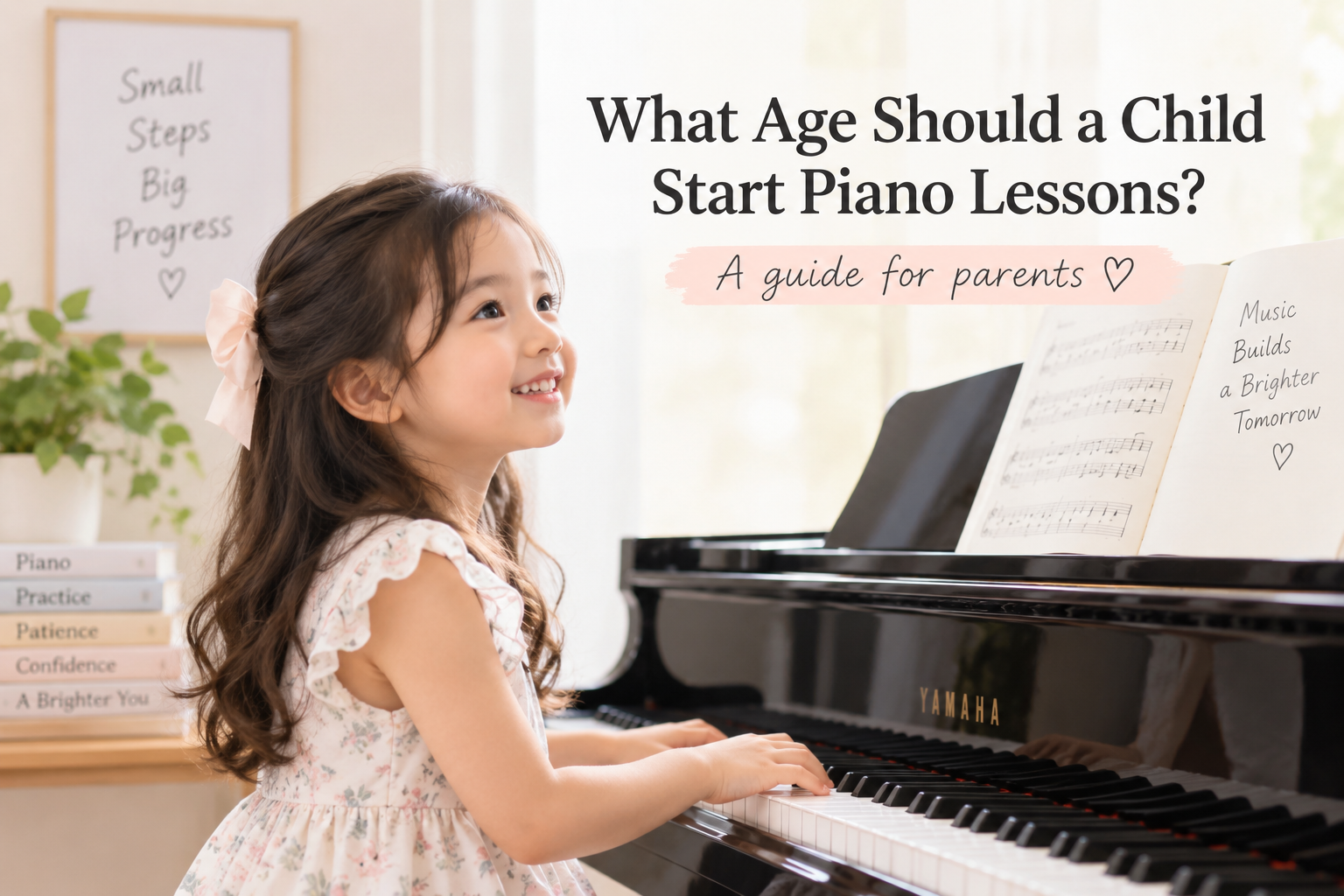
One of the most common questions parents ask me is, “What is the best age for my child to start piano lessons?” In my experience, many children are ready to begin piano lessons around age five or six. However, age is not the only thing that matters. A child’s readiness is even more important. What…