How Often Should My Child Practice Piano? A Teacher’s Guide by Level
One of the most common questions parents ask me is, “How often should my child practice piano?”
My answer is: it depends on the child’s age and level.
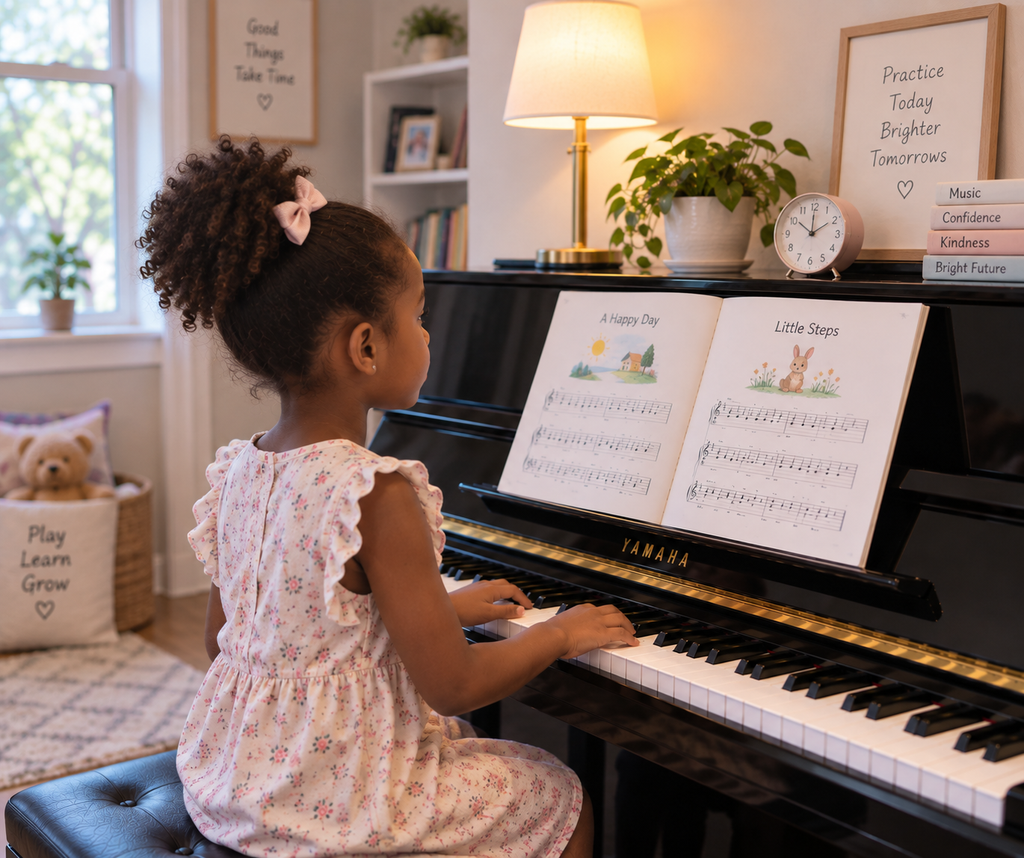
For young beginners, longer practice is not always better. Asking a small child to sit at the piano for too long can make piano feel boring or difficult. At this stage, the most important goal is not the number of minutes practiced. It is developing the habit of sitting at the piano regularly.
How Often Should My Child Practice Piano as a Young Beginner?
Young children naturally have shorter attention spans. Instead of expecting a beginner to practice for 30 minutes or an hour, I usually recommend starting with 10–15 minutes at a time.
The key is consistency.
Look for small opportunities during the day. A child might practice after breakfast before school, after coming home, before or after dinner, or before getting ready for bed.
Even with only 10 minutes, the child can sit down, open the piano book, check the teacher’s assignments, and play through the homework a few times.
Ten focused minutes each day can be much more effective than one long practice session the night before the next lesson.
The goal is to make sitting at the piano a normal part of everyday life.
Use a Practice Chart for Young Children
Parents can help young beginners develop this habit by using a practice chart, agenda, or checklist.
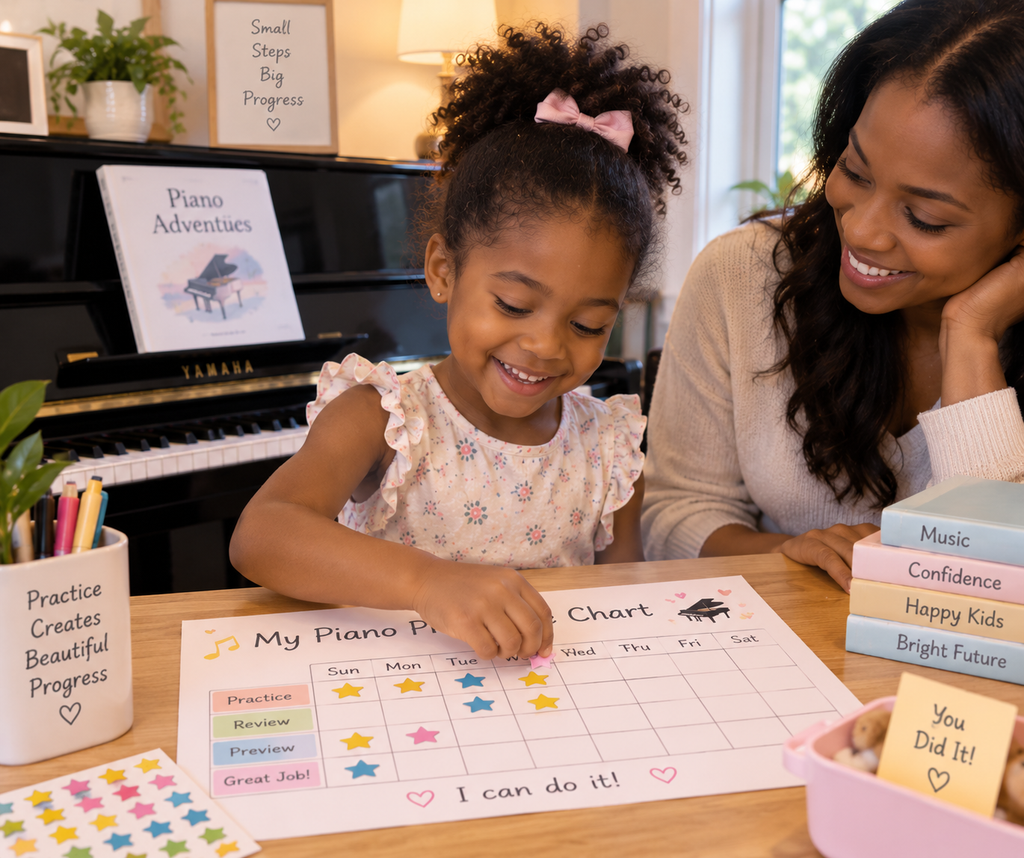
Each time the child practices, let them check off the day or add a sticker to the chart. After collecting a certain number of stickers, parents can offer a small reward.
The reward does not need to be expensive. It might be a small treat, a little toy, choosing a favorite family activity, or another simple prize.
The purpose is not to teach children to practice only for rewards. The reward simply provides extra motivation while the habit is being established.
A young child can look at the chart and think, “I practiced all these days. I did it!”
That sense of accomplishment can be very motivating.
As practice becomes part of the child’s routine, parents can gradually reduce the rewards. Eventually, the satisfaction of playing better and learning new music should become the motivation.
I mainly recommend this approach for young elementary-age children and very young beginners. Older students usually respond better to goals such as learning a favorite piece, preparing for a performance, or reaching a new level.
Practice Time Should Increase With the Level
As students advance, their practice time should naturally increase.
A beginner may make good progress with 10–15 minutes of focused daily practice. But by Level 3 or 4, Sonatina repertoire, Czerny 30 or 40, or similar intermediate material, that amount of time is usually no longer enough.
At this stage, even 45 minutes may sometimes be short, and some students may need an hour or more depending on their repertoire and goals.
Advanced music requires time to work on difficult sections, correct mistakes, develop technique, and pay attention to dynamics, articulation, and musical expression.
Practice time should grow gradually along with the student.
When parents ask how often should my child practice piano, I always encourage them to consider the student’s current level rather than comparing their child with other students.
Good Practice Means More Than Playing a Piece
Students sometimes think practicing means playing an assigned piece from beginning to end several times.
That is part of practice, but effective practice involves more.
I encourage my students to think about three things:
Practice. Review. Preview.
1. Practice
Students should learn to check themselves while playing.
Am I playing the correct notes? Is the rhythm correct? Am I using the correct fingering? Am I actually reading the music, or am I simply playing from memory?
Self-checking is an important part of becoming an independent musician. As students advance, they should gradually learn to recognize mistakes instead of depending on the teacher to correct everything at the next lesson.
2. Review
Do not immediately forget a piece just because the teacher has finished teaching it.
Occasionally go back to an older book and play a piece learned a few weeks or months ago. Reviewing helps students retain what they have learned and recognize their own progress.
A piece that once felt difficult may suddenly feel easy.
For a child, realizing “This used to be hard, but now I can play it!” can build confidence.
3. Preview
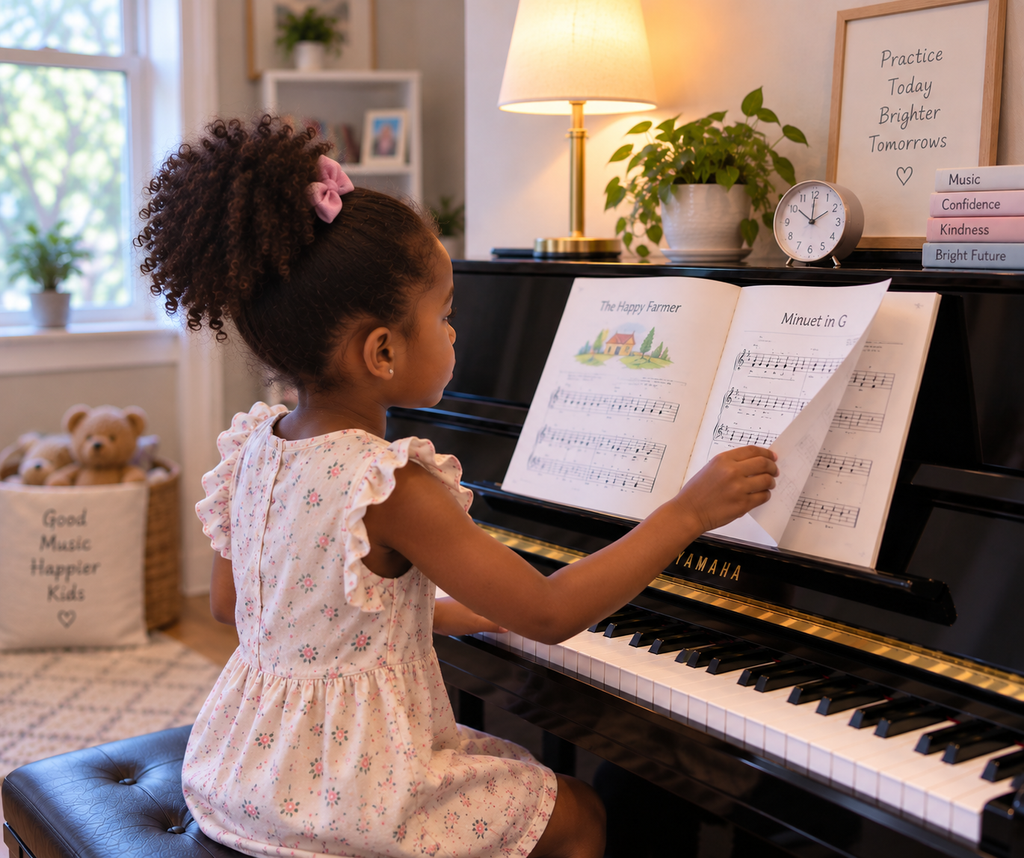
I also encourage students to look ahead before the next lesson.
Turn the page and see what is coming next. The student does not need to learn the entire piece alone.
Simply look at the music. What is the time signature? Are there familiar notes or patterns? Is there a new rhythm?
A student can even try sight-reading only the right hand or left hand.
This small amount of preparation makes new material feel less intimidating at the next lesson. It can also make lesson time more productive because the student has already seen the music.
Practice Soon After the Lesson
One habit I especially recommend is:
Practice on the day of the lesson or, at the latest, the following day.
During a lesson, the teacher may explain a new rhythm, correct fingering, mark the music, or demonstrate how to practice a difficult section.
If the student waits three or four days before opening the book again, many of those details may already be forgotten.
The child may look at the music and wonder, “What did my teacher tell me to do here?”
But if the student practices that evening or the following day, the lesson is still fresh.
This does not need to be a long practice session. For a young beginner, even 10–15 minutes can be enough. The purpose is simply to reinforce what was learned before it begins to fade from memory.
Parents can also find helpful music education resources through the Music Teachers National Association (MTNA).
Consistency Matters More Than Perfection
Parents sometimes worry that their child is not practicing long enough.
When considering how often should my child practice piano, I would focus less on the clock for young beginners and more on consistency.
Can your child sit at the piano for 10 minutes today? Try it again tomorrow. Over time, piano practice can gradually become part of the daily routine.
As the child grows and advances, practice sessions will naturally become longer and more detailed.
A beginner does not need to practice like an advanced pianist. First, children need a positive relationship with the instrument and a healthy practice habit.
Start small. Practice often. Review what you have learned. Preview what is coming next. And return to the piano soon after each lesson while everything is still fresh.
Small, consistent habits can make a tremendous difference in a student’s progress over time.
If your child is just getting started, you may also enjoy my guide, “What Age Should a Child Start Piano Lessons?”
Pingback: Child Hates Practicing Piano? A Piano Teacher's Advice