
Have you ever considered adult piano lessons but wondered if you are too old to begin?
Adult piano lessons can be a wonderful way to start learning, no matter your age.
After teaching piano for about 25 years, I have taught many adult students, from their 20s to their 70s. Most of them were not trying to become professional musicians. They simply wanted to enjoy piano as a hobby.
Some wished they had learned as children. Others had taken lessons when they were young and wanted to start again. As adults, they finally had the opportunity to learn something they had always wanted to do.
From my experience, it is never too late to learn piano.
Many adults wonder if it is too late to start adult piano lessons, but the truth is that you can begin learning piano at almost any age.
Why Adult Piano Lessons Are Great at Any Age
Adults often understand musical concepts faster than young children.
Rhythm is a good example. If a quarter note represents one full beat, an eighth note is half of that beat, and a sixteenth note is one quarter. Adults can usually understand these fractions easily.
The same is true with more complicated rhythms such as triplets. Adults already understand numbers, fractions, and patterns, so explaining how a beat is divided often makes sense quickly.
Musical expression can also be easier to explain to adults.
With a young child, I may say, “Play louder,” or “Play softer.” With an adult, I can say, “Make this section sound majestic,” or “Play this phrase as if you are whispering.”
Adults can connect these descriptions with emotions and life experiences. This can help them understand that piano playing is more than simply playing the correct notes.
Benefits of Adult Piano Lessons
Adult students may also have more choices when scheduling lessons.
Children usually need lessons after school or on weekends. Adults may be able to take lessons in the morning, afternoon, evening, or on weekends depending on their work schedule.
However, adult life can also make consistency difficult. Work trips, family vacations, and other responsibilities can interrupt lessons.
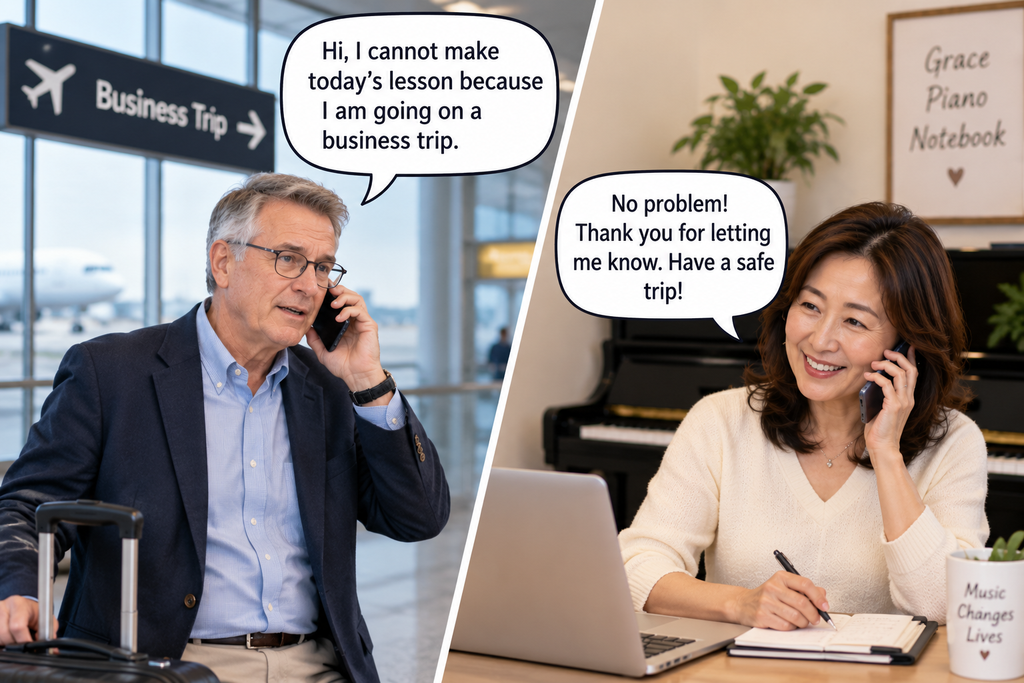
In my experience, many adults study for one to three years rather than continuing for many years like some children do.
That is why consistency is important.
Adult piano lessons can also help you stay motivated and make steady progress.
The Fingers May Need More Time
One challenge for adult beginners is finger coordination, especially for older students.
Sometimes a student knows exactly which note and finger to use, but the hand does something different. The mind understands, but the fingers need more time to respond.
Adult hands can also be larger. Some students, especially men with larger fingers, may accidentally touch two keys instead of one.
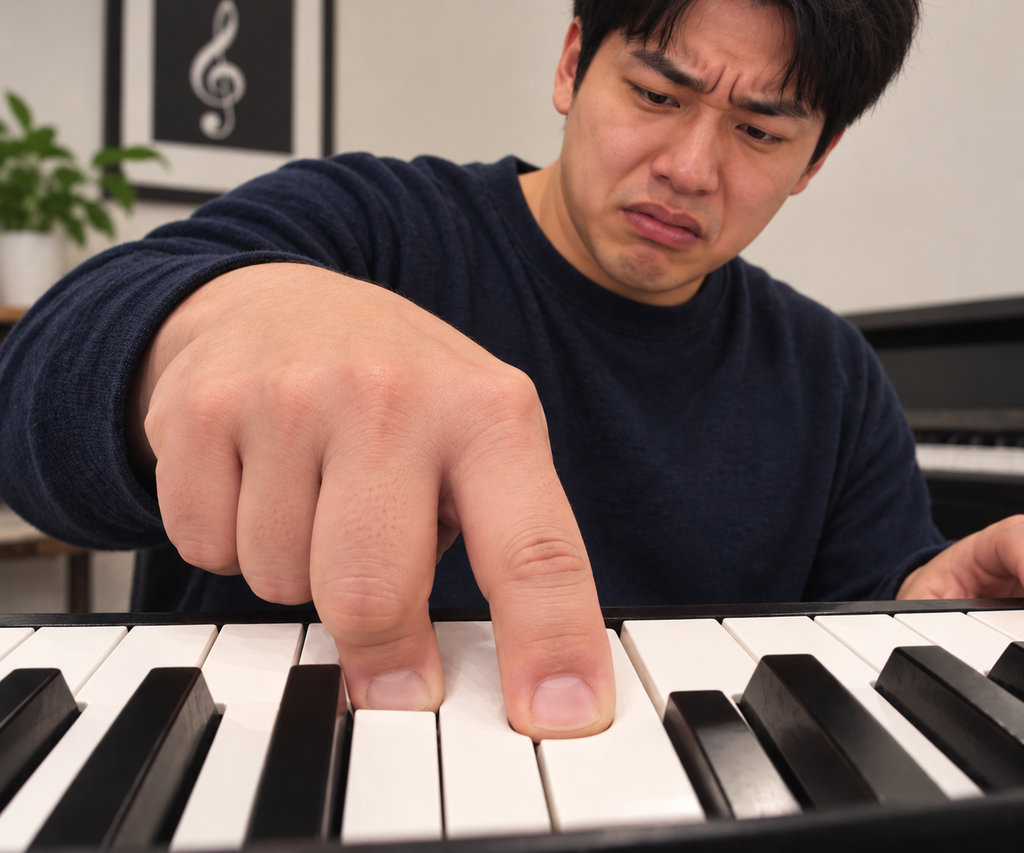
These challenges do not mean that an adult cannot learn piano. The hands simply need time and practice to develop coordination and control.
If you’re wondering how often you should practice piano, read my guide on how often piano students should practice.
Adults Still Need a Strong Foundation
One thing I strongly believe is that adult beginners should not skip the basics.
Adults may learn faster than children, but they still need to understand note reading, rhythm, fingering, hand position, and musical symbols.
I always begin with the fundamentals, regardless of the student’s age.
An adult may move through the beginner levels more quickly, but moving quickly is different from skipping them.
Without a strong foundation, more difficult music can become frustrating later.
Play the Music You Love
Once an adult student has developed a good foundation, I like to introduce music they truly want to play.
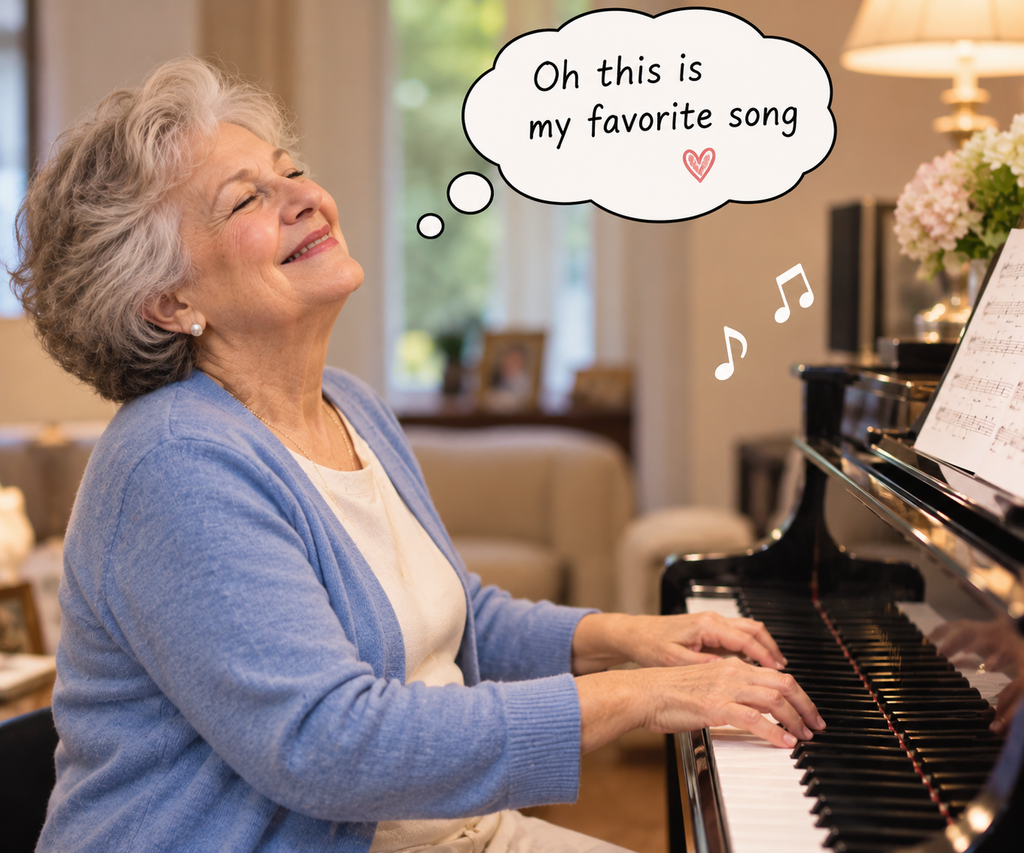
It may be classical, pop, jazz, movie music, hymns, or another favorite style.
For most adult students, this is the real goal.
They are not trying to become professional pianists or prepare for a career in music. They want to sit at the piano and play songs they have loved for years.
Learning piano can simply be something enjoyable that they do for themselves.
Adults interested in music education can also find resources through the Music Teachers National Association.
Am I Too Old to Start Piano?
No.
Whether you are in your 30s, 40s, 50s, 60s, or 70s, you can learn piano.
Adults may have some physical challenges that children do not have, but they also have advantages in understanding rhythm, musical concepts, and emotional expression.
After about 25 years of teaching students of many different ages, I believe age is much less important than patience and consistency.
Learn the basics carefully. Practice regularly. Then begin exploring the music you have always wanted to play.
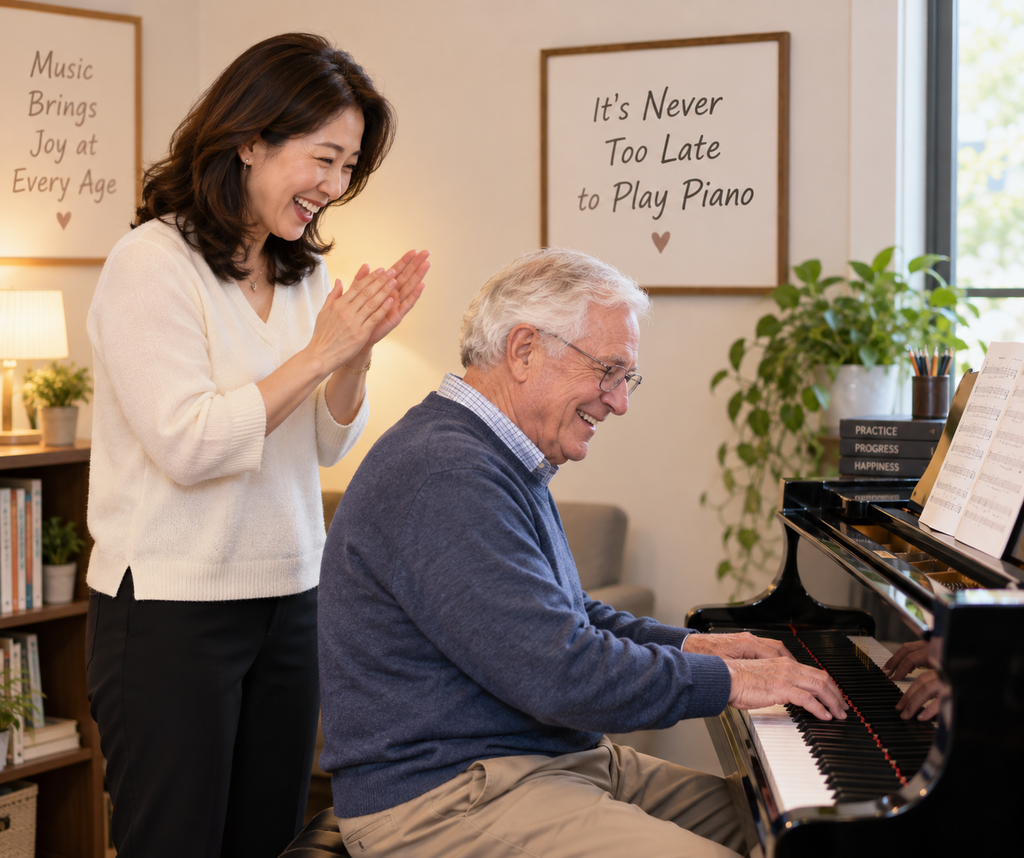
You do not need to become a professional pianist.
Sometimes the best reason to learn piano is simply because you have always wanted to.
And it is never too late to start.