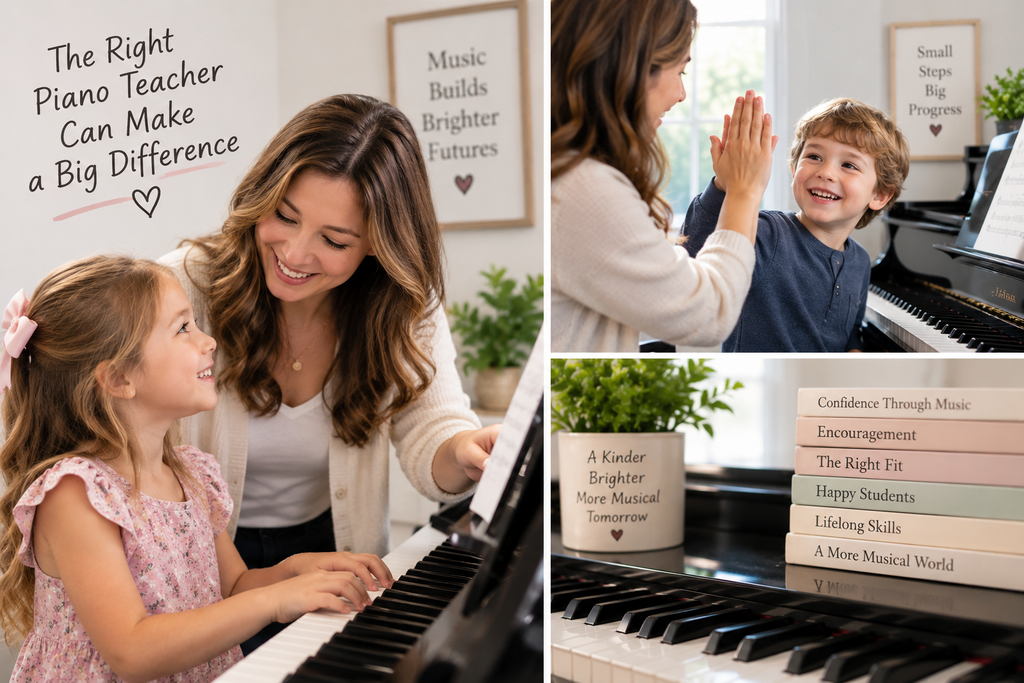
How to choose the right piano teacher is one of the most important decisions parents can make when starting their child’s musical journey.
What Makes the Right Piano Teacher for Your Child?
Choosing the right piano teacher is about more than finding someone who plays the piano well. A teacher may have excellent musical skills and impressive credentials, but that does not necessarily mean they are the right match for every child.
After teaching children for many years, I have learned that every student is different. Children have different personalities, attention spans, learning styles, and levels of confidence.
So instead of simply asking, “Is this a good piano teacher?” parents should ask:
“Is this the right piano teacher for my child?”
Here are some important things to consider.
1. Start With Your Child’s Personality
Before looking at a teacher’s résumé, think about your child.
Is your child shy, quiet, or sensitive? Or are they outgoing, energetic, talkative, and easily distracted?
A shy or sensitive child may not respond well to a teacher who is extremely strict or aggressive. If a young child feels intimidated during lessons, they may begin to associate piano with stress.
For these children, a patient and encouraging teacher may be a better match. Sometimes a cheerful and outgoing teacher can also help a quiet child become more comfortable and confident.
The goal is not simply to find a “nice” teacher. It is to find a personality and teaching style that bring out the best in your child.
2. Some Children Need More Structure
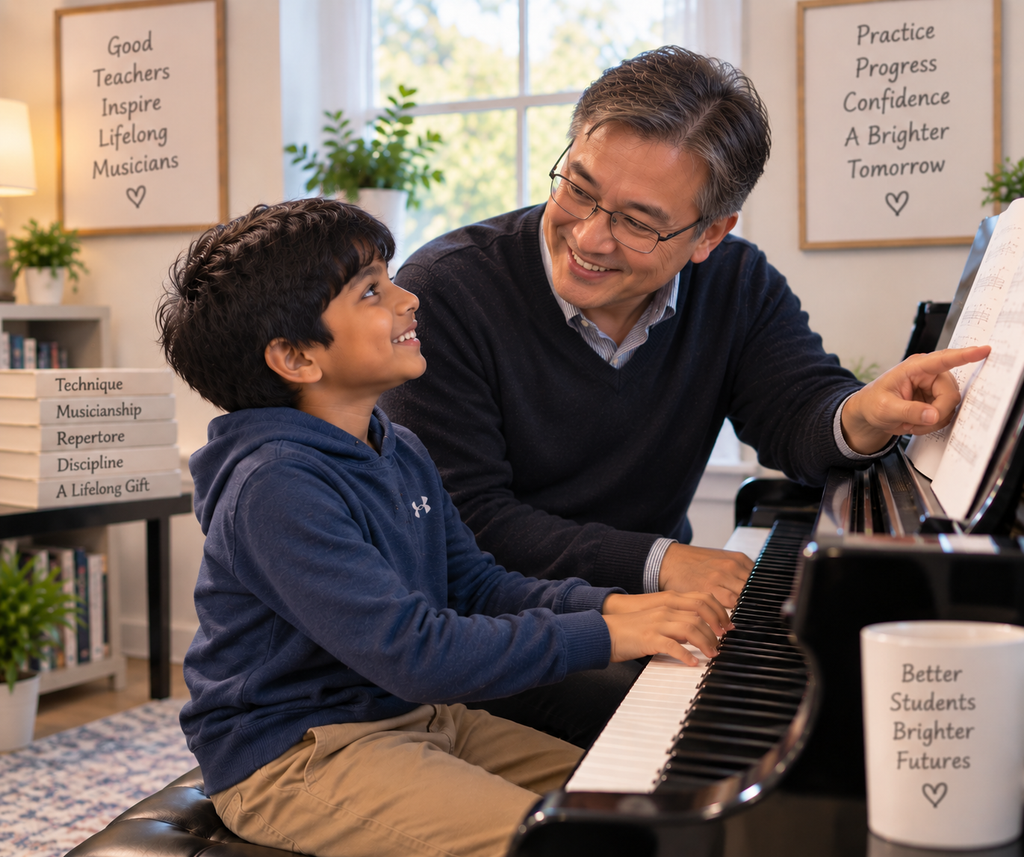
Energetic, playful, or easily distracted children may need a different approach.
For these students, a more structured and firm teacher can sometimes be a better fit.
There is an important difference between being firm and being harsh. A good teacher can be warm and supportive while still maintaining control of the lesson.
Children need to know that their teacher cares about them, but they also need clear expectations and boundaries. The teacher should be able to guide the lesson rather than constantly being led by the child’s mood or behavior.
For some children, this structure helps them focus and learn more effectively.
3. Experience Matters
Teaching experience is especially important when working with young children.
An experienced teacher has usually worked with many different types of students—shy children, confident children, fast learners, easily distracted students, and children who need more time.
Over the years, teachers learn to recognize what an individual child needs. One student may need encouragement, another may need firmer boundaries, and another may need a completely different explanation of the same concept.
Knowing how to play the piano well is important, but knowing how to teach children is a separate skill.
That skill often develops through years of working with different students, which is why I believe experience is an important consideration.
4. Reliability and Consistency Matter
Parents should also consider whether a teacher is dependable.
Piano progress develops gradually. Regular lessons allow a teacher to monitor progress, correct problems before they become habits, and introduce new material at the right pace.
Of course, everyone occasionally needs to cancel because of illness, emergencies, or other unavoidable circumstances. However, frequent cancellations, repeated lateness, frequent travel, or long interruptions can affect a student’s progress.
Young children especially benefit from routine. Having a piano lesson at a consistent time each week helps music become a regular part of their lives.
Parents should consider whether the teacher is generally punctual and whether lessons are held consistently.
Good teaching matters, but consistency matters too.
5. Consider Age and Gender—But Look at the Individual Teacher
A teacher’s age and gender can be reasonable factors to consider because children have different comfort levels and personalities.
Age may also influence communication style, energy, teaching approach, and experience.
However, I would not choose a teacher based on age or gender alone.
Instead, observe your child with the teacher.
Does your child feel comfortable asking questions? Can they make mistakes without feeling embarrassed or frightened? Does the teacher communicate naturally with them? Does your child feel comfortable returning for another lesson?
The relationship between the individual teacher and student is ultimately more important.
6. A Good Teacher Keeps a Child Interested
For young beginners, maintaining interest in piano is extremely important. The age at which a child begins can also make a difference. you can read more in my guide, “What Age Should a Child Start Piano Lessons?”
Children eventually need discipline and responsibility, but piano should not immediately become another source of pressure.
If a young beginner receives too much homework, constantly worries about mistakes, or feels stressed before every lesson, they may quickly lose interest.
A good teacher knows when to challenge a student and when to slow down. Expectations can gradually increase as children become older and more advanced, but beginners also need opportunities to enjoy music and feel successful.
Ideally, a young student should leave a lesson thinking:
“I like playing the piano. I want to learn more.”
Once that interest develops, it becomes much easier to build discipline, technique, and independence later.
7. Communication With Parents Is Important
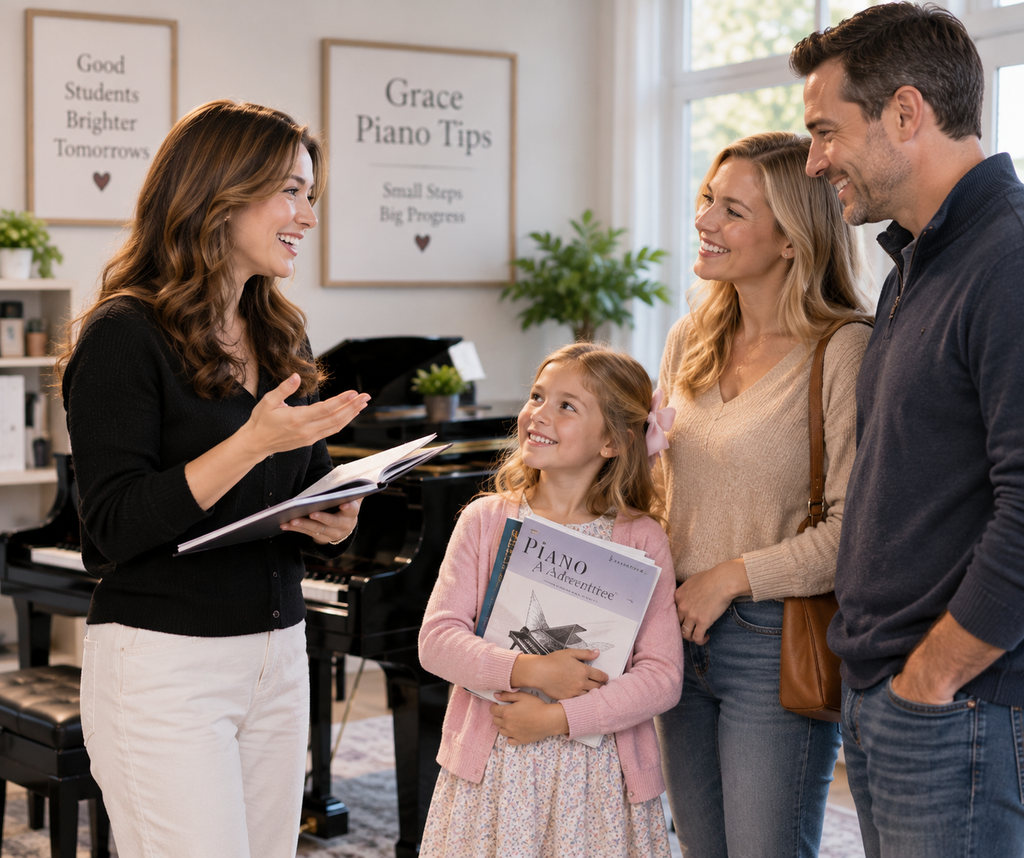
For young students, good communication between the teacher and parents can make a significant difference.
Simply saying, “She did well today,” does not give parents much useful information.
Specific feedback is much more helpful.
For example:
“Today I noticed that she kept straightening her fingers, so we worked on keeping them gently curved. When she practices at home, please remind her if you notice her fingers becoming straight again.”
Now the parent knows exactly what the child worked on and what to watch for at home.
Parents enjoy hearing about their child’s strengths, but constructive feedback is valuable too. A teacher should be able to explain what needs improvement and, when appropriate, how parents can help.
At the same time, communication should not create unnecessary pressure. I do not think parents need a weekly report about whether their child practiced enough.
Instead, practice habits can be mentioned when there is a noticeable pattern:
“She has been practicing very consistently lately, and I can really see the improvement.”
Or:
“He doesn’t seem to be practicing as regularly these days. A little more consistency at home would help.”
For young students, teachers and parents should work as a team. The teacher provides professional guidance, parents provide gentle support at home, and the child receives consistent encouragement.
Finding how to choose the right piano teacher becomes easier when you know what qualities to look for.
8. Look Beyond Credentials
Degrees, certifications, performance experience, and musical accomplishments are valuable, but parents should look beyond a résumé.
A highly accomplished pianist is not automatically the best teacher for a five-year-old beginner.
Teaching children requires patience, communication, flexibility, leadership, and an understanding of different personalities and learning styles.
When meeting a potential teacher, pay attention to how they interact with your child—not only to their musical accomplishments.
A strong teacher combines musical knowledge with the ability to teach, connect, adapt, and communicate.
When deciding how to choose the right piano teacher, parents should also consider reliability, consistency, and the teacher’s ability to keep students motivated.
Parents can also visit the Music Teachers National Association (MTNA) to learn more about professional music teaching standards.
How to Choose the Right Piano Teacher: Final Thoughts
There is no single piano teacher who is perfect for every child.
A quiet child may thrive with a warm and encouraging teacher, while an energetic child may benefit from someone who provides more structure. Experience, reliability, communication, and the ability to maintain a child’s interest are all important.
Most importantly, look for someone who understands your child and can provide strong musical instruction without taking away the joy of learning.
The right piano teacher can do much more than teach notes and songs. Over time, a great teacher can help a child develop confidence, discipline, independence, strong musical skills, and a love of music that may last a lifetime.
Ultimately, how to choose the right piano teacher depends on finding someone who understands your child and can help them enjoy learning music.