When piano beginners first learn about the quarter note, half note, and whole note, understanding how these note values are related can make rhythm much easier to learn.
A quarter note gets 1 beat.
A half note gets 2 beats.
A whole note gets 4 beats.
Students can memorize these numbers quickly.
But I think there is something even more important to understand first:
Why are they called quarter notes, half notes, and whole notes?
When students understand where these names come from, the note values suddenly make much more sense.
I often see students react with:
“Oh! I didn’t know that!”
Instead of simply memorizing 1, 2, and 4, they begin to understand how the notes are related to each other.
Let’s look at quarter notes, half notes, and whole notes using 4/4 time.
Start With 4/4 Time
Understanding piano note values becomes much easier when we start with 4/4 time.
In the previous lesson, we talked about counting rhythm in 4/4 time.
In 4/4 time, there are four beats in each measure.
I often explain a measure to young students as a room.
Imagine that one measure is one room.
That room has space for four beats:
1 – 2 – 3 – 4
When all four beats are filled, the room is full.
Now we can use that full room to understand why whole notes, half notes, and quarter notes have their names.
Piano Note Values: Why Is It Called a Whole Note?
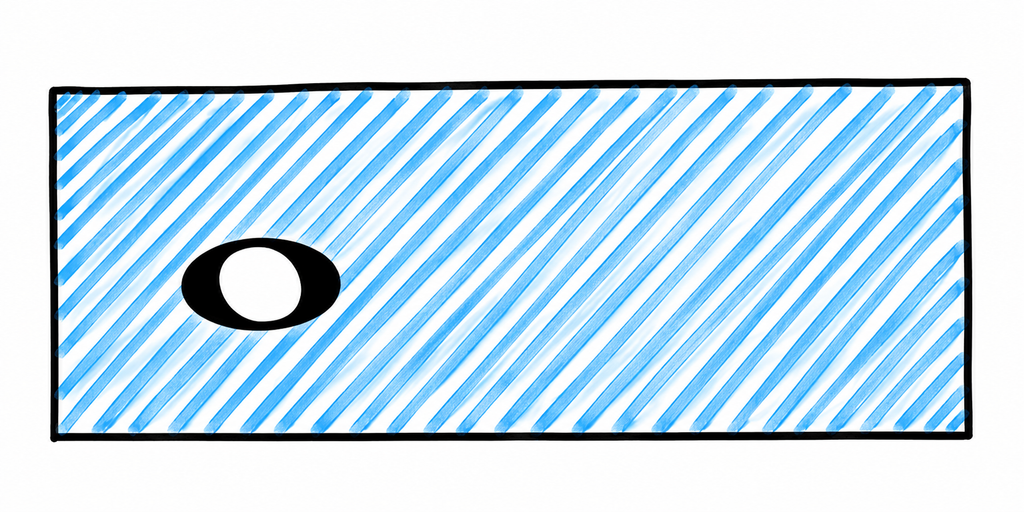
Let’s imagine that our 4/4 measure is one whole room.
The entire room represents four beats.
Whole room = 100% = 4 beats
A whole note fills that entire measure in 4/4 time.
That is why I like to start by explaining the whole note.
The word whole means the entire thing—the full amount.
So in our 4/4 room:
Whole Note = 4 beats
If there is one whole note in the measure, it fills the whole room.
Count:
1 – 2 – 3 – 4
And most importantly, keep holding the note for the entire four beats.
Piano Note Values: Why Is It Called a Half Note?
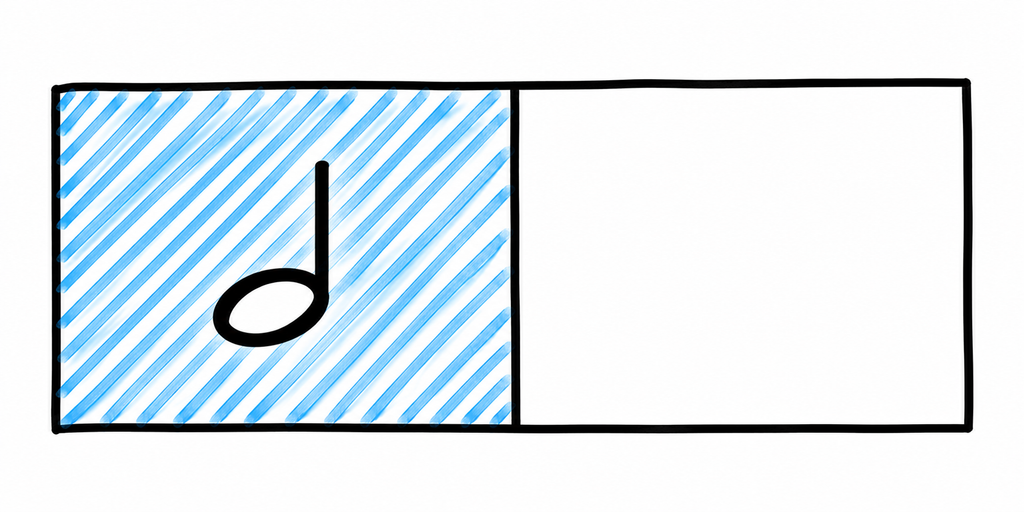
Now take our whole room and divide it exactly in half.
The whole room was four beats.
Half of four is two.
Half of the room = 50% = 2 beats
That is why a half note gets two beats in this example.
Two half notes can fill one 4/4 measure:
Half Note + Half Note = 2 beats + 2 beats = 4 beats
You can count:
1 – 2 | 1 – 2
Each half note must receive its complete two beats.
Piano Note Values: Why Is It Called a Quarter Note?
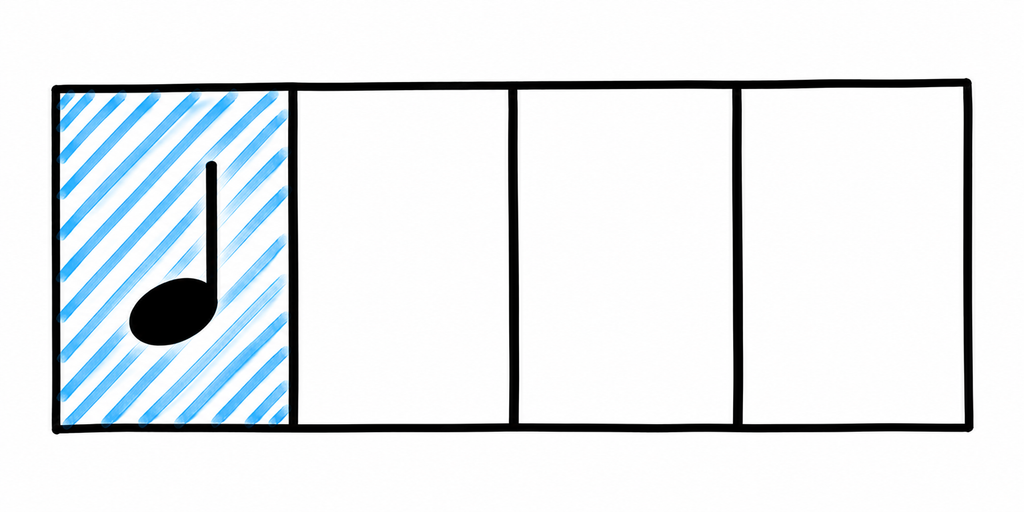
Now divide the whole room into four equal sections.
Each section is one quarter of the whole room.
Quarter of the room = 25% = 1 beat
So:
Quarter Note = 1 beat
Four quarter notes fill one 4/4 measure:
1 + 1 + 1 + 1 = 4 beats
You can count them:
1 – 2 – 3 – 4
Or when I first introduce the value of each individual quarter note, I may demonstrate:
1 | 1 | 1 | 1
Each quarter note receives one complete beat.
Understanding Piano Note Values as Percentages
Another easy way to understand the quarter note, half note, and whole note is to think in percentages.
This is a simple way for beginners to understand piano note values.
A full 4/4 measure is 100%.
A whole note fills 100% of that measure.
A half note fills 50%.
A quarter note fills 25%.
So the relationship looks like this:
Whole Note = 100% = 4 beats
Half Note = 50% = 2 beats
Quarter Note = 25% = 1 beat
Once students see this relationship, the names become much easier to remember.
They are no longer three unrelated notes with three numbers to memorize.
They are all parts of the same whole.
Why I Like to Explain the Whole Note First
Many beginner piano methods introduce the quarter note first, followed by the half note and then the whole note.
But when I explain note values to my students, I like to show them the relationship starting with the whole.
First, we have the entire four-beat room.
Then we divide it in half.
Then we divide it into quarters.
For many students, this makes the names much more logical:
Whole → Half → Quarter
They can see where each note value comes from instead of simply memorizing it.
Counting Is Not Enough—You Have to Hold the Note
Understanding that a half note gets two beats is only the beginning.
The next challenge is actually holding it for two complete beats.
This is something I emphasize very strongly with my students.
A student may look at a half note and say:
“1, 2.”
But sometimes the finger has already left the key before the second beat is completely finished.
Instead of playing two full beats, the student may actually be holding the note for something closer to 1½ beats.
Students naturally want to move on to the next note.
But if the composer wrote a half note, we need to give that note its full value.
Two beats means two complete beats.
Not almost two.
My Donut Example for Teaching Half Notes

Here is one of my favorite ways to explain this to young students.
I pretend that I have two donuts.
I open my mouth really wide and pretend to eat the first donut.
But eating a donut does not mean simply putting it into my mouth.
First I take a bite.
Then I chew.
And chew.
And then finally—
Gulp!
I swallow it.
Only then have I completely finished eating that donut.
Then I tell the student:
“I’m still hungry. I need one more!”
So I pretend to eat the second donut.
Again:
Eat.
Chew.
Chew.
And—
Gulp!
Swallow.
I even exaggerate the swallowing motion so the student can see that I have completely finished the first donut before moving on to the second one.
Why do I do this?
Because two donuts take more time to eat than one donut.
In the same way, a half note needs twice as much time as a quarter note.
A half note is not:
“1, 2—done!”
said as quickly as possible.
It needs the complete amount of time for both beats.
I Write “HOLD” on the Music
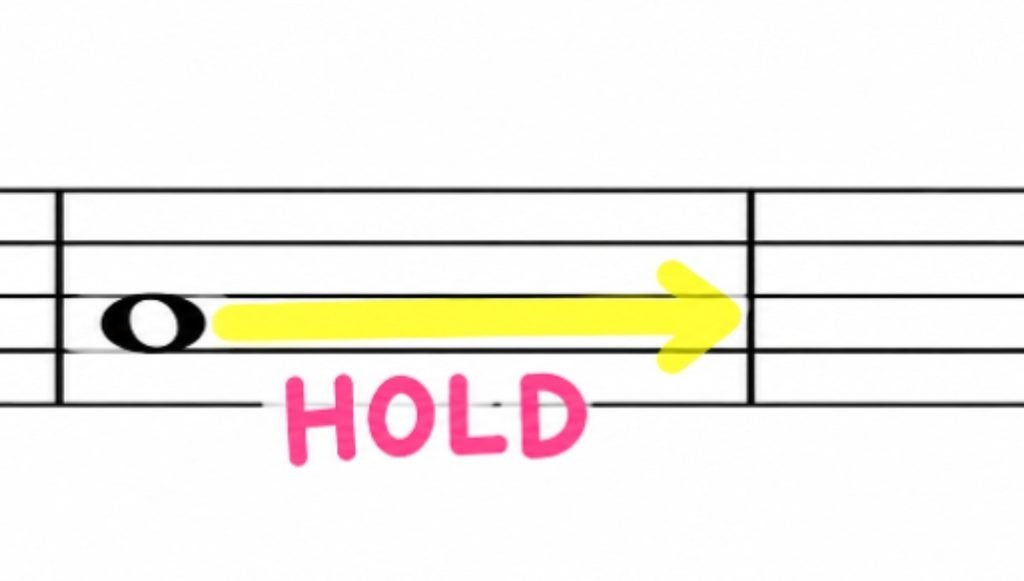
When a student continues to release half notes too early, I often draw a line or an arrow next to the note and write:
HOLD
The visual reminder helps the student understand that the finger should stay on the key.
Sometimes I will even gently keep the student’s hand, arm, or shoulder from moving too soon while we count together:
1……2……
The goal is for the student to physically feel how long two complete beats actually are.
Listen to the Piano Sound
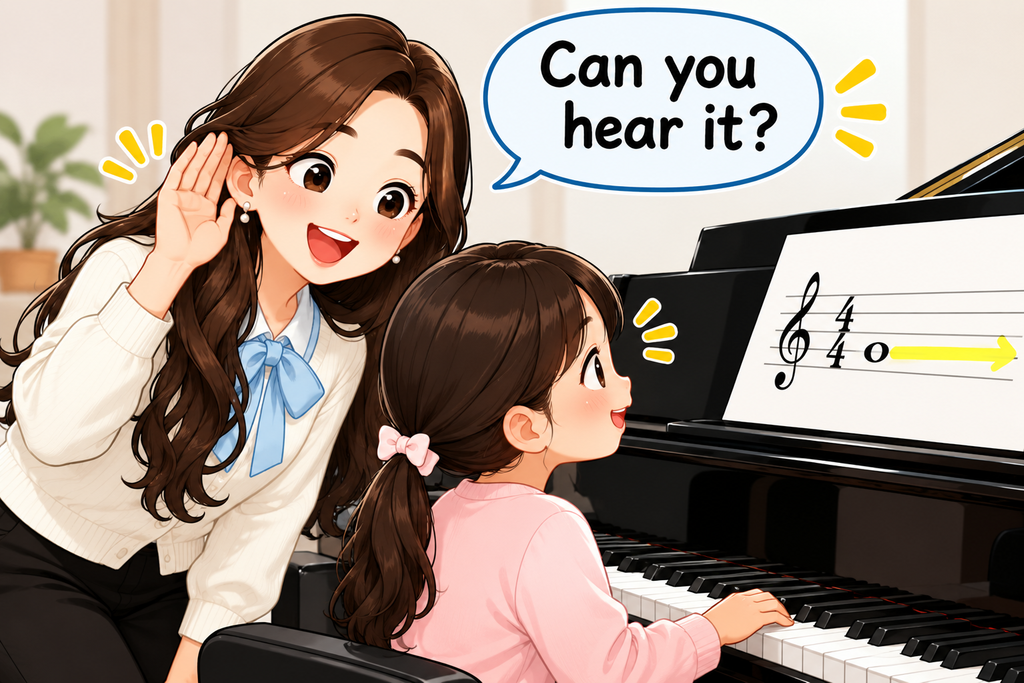
There is another important part of this exercise.
I do not want students only watching numbers and counting mechanically.
I want them to listen.
While the student is holding the key, I may point toward my ear and ask:
“Can you still hear it?”
Listen carefully.
The piano sound is still there.
The composer chose a half note because that sound is supposed to continue for two beats.
The same idea applies to a whole note.
If the music shows a whole note, we count:
1 – 2 – 3 – 4
and keep the finger down for all four beats.
Many beginning students will naturally release a four-beat note after only two or three beats if no one reminds them.
That is why learning to listen while holding a note is so important.
Give Every Note Its Full Value
I am very particular about note values when I teach beginning piano students.
I would rather correct this habit at the very beginning than wait until the music becomes more difficult.
If students repeatedly shorten half notes and whole notes when they are beginners, that habit can become much harder to correct later.
As the music gets faster and more complicated, long notes may become even shorter.
So from the beginning, I teach my students:
Quarter Note = 1 complete beat
Half Note = 2 complete beats
Whole Note = 4 complete beats
Not approximately.
Not almost.
Give every note its full value.
A Simple Way to Remember
If you are learning these notes for the first time, remember the 4/4 room:
Whole = the whole room = 4 beats
Half = half the room = 2 beats
Quarter = one quarter of the room = 1 beat
Then remember one more thing:
Do not rush to the next note.
Count it.
Hold it.
And most importantly—
listen to it.
When students understand both the name of the note and the amount of time it represents, rhythm begins to make much more sense.
Learning piano note values this way gives beginners a strong foundation for rhythm.
And that strong foundation will become increasingly important as the music gets more advanced.