When beginning piano students learn about in piano music, there are many things to notice include a time signature.
What notes do I play?
Where do my hands go?
How fast should I play?
But before we start playing, there is something very important that I want my students to check:
the time signature.
The time signature tells us how the beats are organized in each measure. It helps us know how to count the music before we begin playing.
As a piano teacher, I want my students to develop the habit of looking at the time signature before they start a piece.
In this guide, we will focus on three common time signatures for beginning piano students:
2/4, 3/4, and 4/4.
What Is a Time Signature in Piano Music?
A time signature appears near the beginning of a piece of music.
It looks like two numbers, one on top of the other.
For example:
2/4
3/4
4/4
These numbers are not a fraction.
The top number and bottom number give us two different pieces of information about how to count the music.
You can also learn more about time signature and how they work in music.
What Does the Top Number Mean?
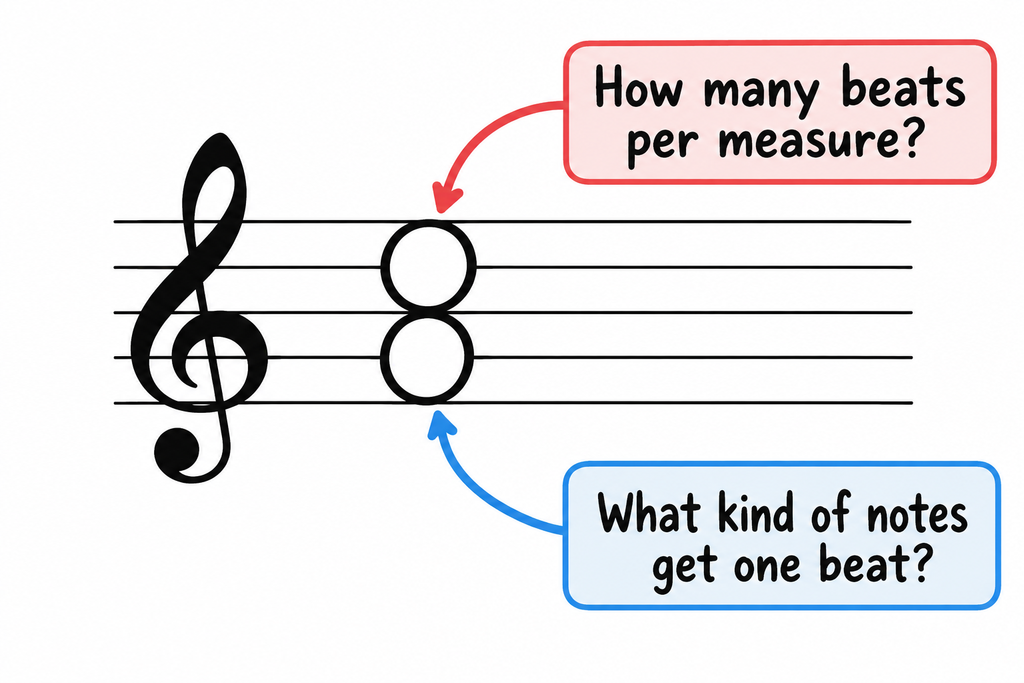
The top number tells us how many beats are in each measure.
For example:
2/4 = 2 beats in each measure
3/4 = 3 beats in each measure
4/4 = 4 beats in each measure
This is usually the first thing I want beginning students to understand.
When they see the top number, they should immediately think:
How many beats do I count before I start the next measure?
What Does the Bottom Number Mean?
The bottom number tells us which type of note receives one beat.
In 2/4, 3/4, and 4/4 time, the bottom number is 4.
The number 4 represents the quarter note.
So in all three of these time signatures:
A quarter note receives one beat.
For beginning students, I like to keep this explanation simple.
First, understand how many beats are in each measure.
Then, understand which note receives one beat.
How to Count 2/4 Time
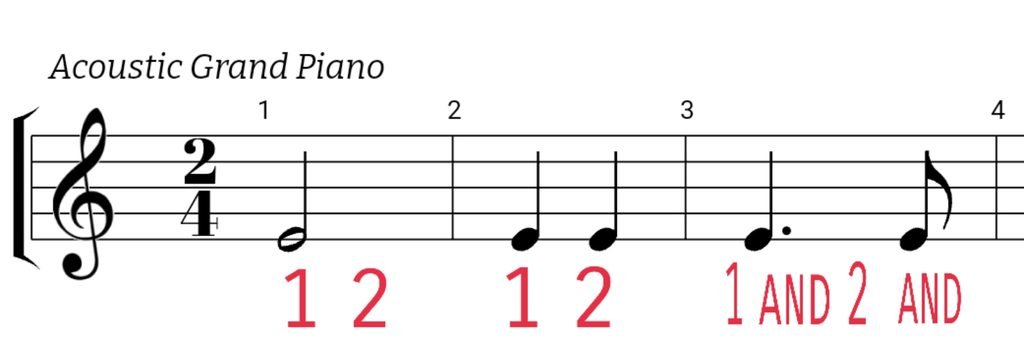
In 2/4 time, there are two beats in each measure.
Count:
1 – 2 | 1 – 2 | 1 – 2
The first beat usually feels stronger:
ONE – two | ONE – two
This creates a steady two-beat feeling.
When my students see 2/4, I want them to look at the top number and immediately know:
Two beats in every measure.
How to Count 3/4 Time
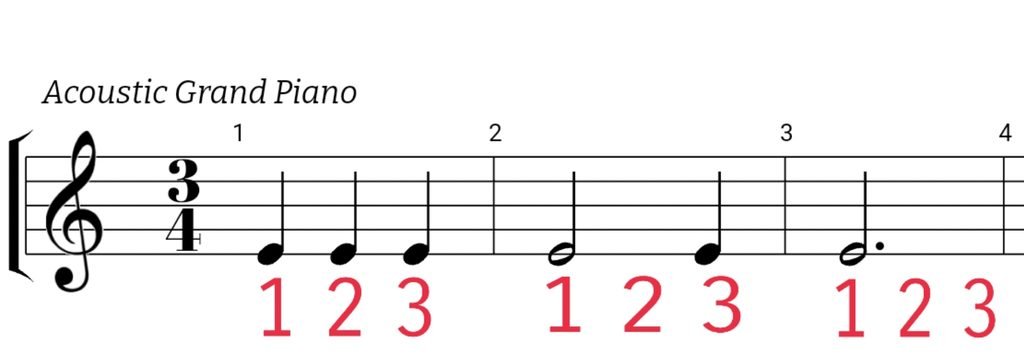
In 3/4 time, there are three beats in each measure.
Count:
1 – 2 – 3 | 1 – 2 – 3
Again, beat 1 usually feels stronger:
ONE – two – three | ONE – two – three
This gives 3/4 music its recognizable three-beat flow.
When students first learn 3/4, I often have them count out loud before they play.
How to Count 4/4 Time
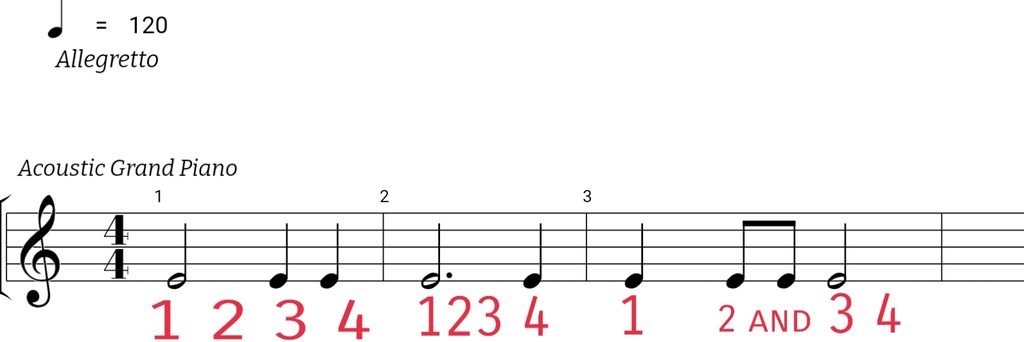
In 4/4 time, there are four beats in each measure.
Count:
1 – 2 – 3 – 4 | 1 – 2 – 3 – 4
This is one of the most common time signatures beginning piano students will see.
When a student sees 4/4, I want them to think:
Four beats in each measure, and the quarter note gets one beat.
Why Is a Time Signature in Piano Music Important?
Many beginning students want to start playing as soon as they see the notes.
But reading the notes is only part of reading music.
Before playing, I encourage my students to look at the time signature and count the beats.
For example, if the piece is in 4/4 time, try counting:
1 – 2 – 3 – 4
before playing the first note.
This gives the student a sense of the beat before the music begins.
If you are still learning how to count beats, read my beginner’s guide to counting rhythm in piano music.
A Simple Time Signature Habit for Beginning Piano Students
Before you begin a new piece, ask yourself two questions:
1. What is the top number?
This tells you how many beats are in each measure.
2. What is the bottom number?
This tells you which note receives one beat.
For the time signatures in this article:
2/4 = 2 beats per measure
3/4 = 3 beats per measure
4/4 = 4 beats per measure
And because the bottom number is 4:
The quarter note receives one beat.
Check the Time Signature in Piano Music before You Play
Beginning piano students often focus so much on finding the correct keys that they forget about rhythm.
But music is not only about playing the correct notes.
The notes also need to happen at the correct time.
That is why understanding the time signature is so important.
When you open a new piece of music, do not immediately start playing.
First, look at the time signature.
Ask:
How many beats are in each measure?
Then count before you play.
This small habit can make rhythm much easier to understand.
Final Thoughts on Time Signature in Piano Music
A time signature may look like two small numbers, but it gives us important information about how the music is organized.
For beginning piano students, remember:
2/4 = 2 beats per measure
3/4 = 3 beats per measure
4/4 = 4 beats per measure
And in all three of these time signatures, the quarter note receives one beat.
The next time you begin a new piano piece, check the time signature before you play.
Then count the beats out loud.
Over time, this will become a natural part of reading music.
Once you understand a time signature in piano music, counting each measure becomes much easier.